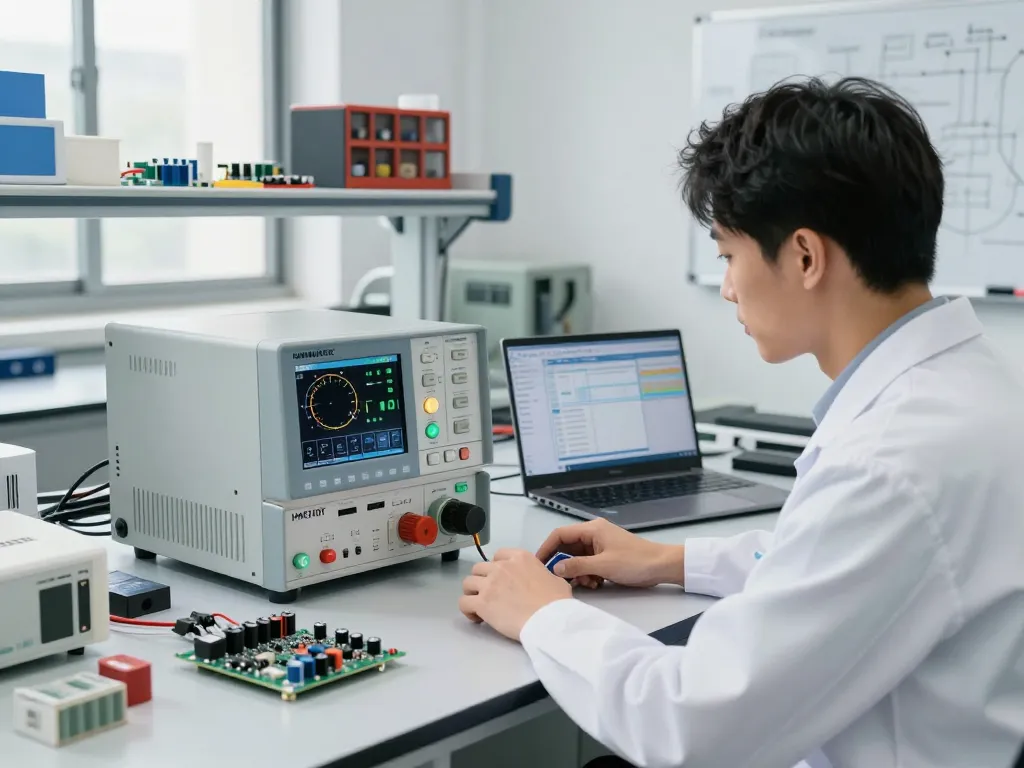
Introduction to Programmable Power Supplies
In the world of electronics and electrical engineering, precision is key. Whether you are conducting experiments in a lab or developing consumer products, reliable power sources are essential. The HANMATEK® HM310T Programmable DC Power Supply is a versatile tool designed to meet the demands of both professionals and hobbyists. With the capability to deliver accurate voltage and current control, it stands out in the realm of power supplies. This article will explore the intricacies of what a programmable power supply is, its key features, and how it differs from standard power supplies. Moreover, we will discuss its applications, benefits, and future trends, ensuring you are well-equipped to select the right power supply for your specific needs. When exploring options, what does a programmable power supply do is a fundamental question that can help clarify its advantages.
What is a Programmable Power Supply?
A programmable power supply is a device used to provide adjustable electrical power in a controlled manner. Unlike conventional power supplies that only allow you to set fixed levels of voltage and current, a programmable power supply enables users to define various output parameters and automate testing processes. With features such as remote control capability, graphical user interfaces, and the ability to store multiple settings, these devices are essential in modern electronics applications. They are particularly useful for automating repetitive tasks and performing complex experiments where precision is crucial.
Key Features and Functions
The HANMATEK® HM310T Programmable DC Power Supply is equipped with several notable features that enhance usability and flexibility:
- Adjustable Voltage and Current: The HM310T offers a voltage range from 0 to 30V and a current output up to 10A, making it suitable for various applications.
- User-Friendly Interface: It features a large digital display that provides real-time readings, simplifying the monitoring of output settings.
- Memory Presets: Users can program and save up to three custom settings, allowing for quick retrieval and adjustments based on specific project requirements.
- Protection Features: The device includes safeguards like over-voltage protection (OVP) and over-current protection (OCP) to prevent damage to connected circuits.
- Compact Design: Its sturdy yet portable build allows for easy installation on workbenches or for use in field settings.
Differences Between Programmable and Standard Power Supplies
While both programmable and standard power supplies serve the basic function of providing electrical power, they differ significantly in their capabilities:
- Control: Programmable power supplies allow for remote control and programming of output parameters, enabling automation of tests, while standard supplies typically require manual adjustment.
- Flexibility: Programmable options can hold various custom settings for different applications, whereas standard power supplies feature fixed output values.
- Monitoring: Advanced programmable models come with connectivity options for monitoring through software, which is often unavailable in standard versions.
Applications of Programmable Power Supplies
Programmable power supplies find their use across various sectors due to their adaptability and precision. Here are some of the primary applications:
Laboratory Testing and Experiments
In academic and research labs, programmable power supplies are essential for conducting experiments that require precise voltage and current control. They can be programmed to simulate different conditions and store parameters for repeated testing, facilitating experiments in physics, chemistry, and electrical engineering.
Industrial Automation and Control
In manufacturing environments, these power supplies are utilized for testing components, systems, and devices, ensuring they meet industry standards. Their programmability allows for efficient testing regimes tailored to specific products, which can improve productivity and reduce costs.
Consumer Electronics and Product Development
For engineers and developers, programmable power supplies are invaluable tools during product development. They can be used to test prototypes and ensure that consumer electronics function correctly under various power conditions, closely simulating real-world usage scenarios.
Benefits of Using a Programmable Power Supply
The advantages of implementing programmable power supplies in your projects are extensive. Here are some key benefits:
Enhanced Control Over Output Parameters
Programmable power supplies give users unparalleled control over the electrical output. This level of precision is crucial in experiments requiring specific voltage or current levels, significantly enhancing the accuracy of results and the reliability of tests.
Improved Safety Mechanisms and Protection Features
Advanced safety features like OVP and OCP help protect both the power supply and connected devices. This is particularly important in environments where failure could lead to costly equipment damage or safety hazards.
Increased Efficiency and Flexibility in Testing
Automating testing processes increases productivity by minimizing manual tasks and reducing the likelihood of human error. Users can run multiple tests in succession without needing to readjust settings each time, saving valuable time and effort.
How to Choose the Right Programmable Power Supply
Selecting the appropriate programmable power supply requires careful consideration of several factors:
Identifying Your Project Needs
Clarifying what you need the power supply for is the first step. Determine the voltage and current requirements for your projects, as well as whether you need programmable features for automation.
Evaluating Specifications and Features
Look at the specifications to ensure compatibility with your existing equipment. Features such as output range, memory presets, and safety protections should align with your project demands.
Considering Budget and Long-term Use
Think about your budget but also consider the potential for future needs. Investing in a high-quality programmable power supply may save you money over time by reducing testing time and minimizing errors.
Future Trends in Programmable Power Supplies
As technology advances, so will programmable power supplies. Here are some trends to watch for in 2026 and beyond:
Advancements in Technology for 2026
Increased integration with smart technologies will likely lead to features like AI-driven automation for more efficient testing and monitoring. Enhanced connectivity options will also emerge, enabling seamless control from various devices.
Impact of IoT and Automation on Power Supply Design
The growing influence of IoT will push manufacturers to develop power supplies that can communicate with other devices, providing real-time data and allowing for more complex testing setups.
Emerging Use Cases and Innovations
As industries evolve, new applications for programmable power supplies will emerge, particularly in sectors such as renewable energy and electric vehicle testing, where precise power management is critical.
What are the primary uses of programmable power supplies?
Programmable power supplies are widely utilized in laboratory testing, industrial automation, and product development, providing tailored electrical power solutions that enhance efficiency and accuracy.
Do I really need a programmable power supply for my projects?
If your work involves repetitive testing or requires precise control over voltage and current, a programmable power supply is highly advantageous, making your testing processes more efficient.
What features should I look for in a programmable power supply?
Look for features like adjustable voltage and current outputs, memory presets, safety protections, and user-friendly interfaces to best meet your testing needs.
How does a programmable power supply improve testing efficiency?
By automating settings and allowing for rapid adjustments, programmable power supplies reduce manual intervention and the time taken for testing cycles, resulting in greater overall efficiency.
What are the safety features of modern programmable power supplies?
Modern supplies typically include OVP, OCP, short circuit protection, and thermal cut-off features, ensuring safe operation and protection of both the device and any connected equipment.